How to help an aging parent who is behind on their mortgage
By Lena Ferraro · Updated 2026-08-01
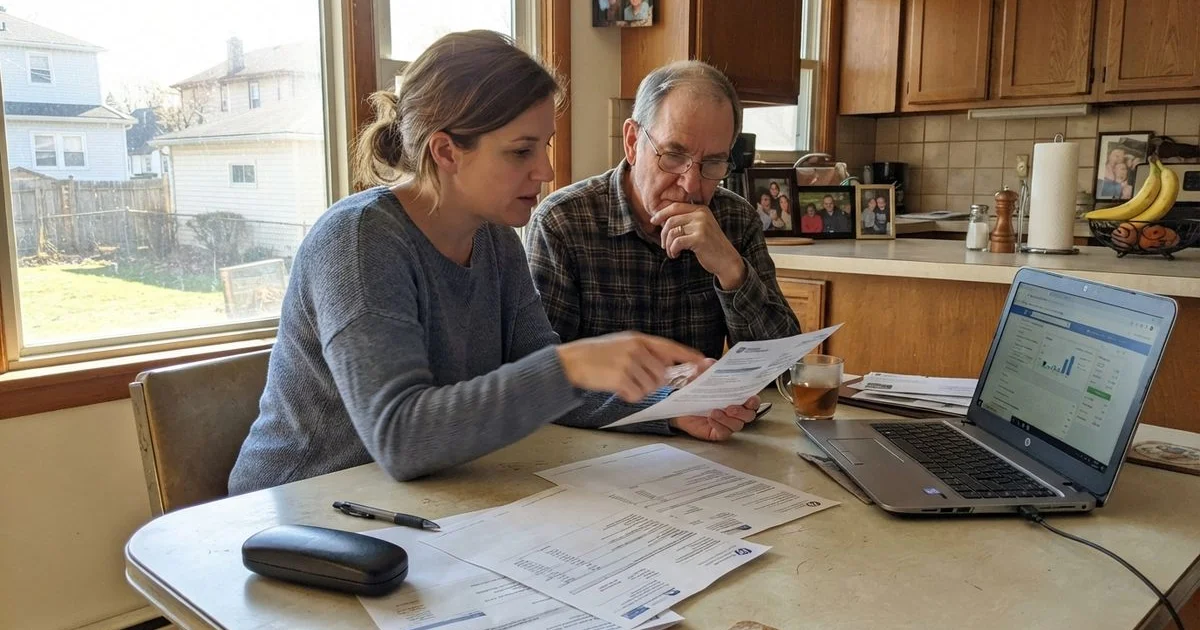
Finding out a parent has fallen behind on their mortgage is often disorienting for adult children, partly because it can be hard to know how to help without stepping on boundaries around money and independence that have existed for decades.
Starting the conversation
This usually goes better as a series of small conversations rather than one big one. A useful opening is asking about a specific, concrete thing, like a letter you noticed rather than their finances broadly: “I saw a letter from the mortgage company, is everything okay with that?” This tends to open the door more gently than a direct question about how much they owe or how far behind they are.
What to check first
Once your parent is willing to talk, a few basic facts matter most:
- How far behind is the loan, and has a formal notice or lawsuit arrived yet
- Does your parent still want to keep the home, or is that already an open question
- What is their current income situation, including any recent changes like reduced hours or a spouse’s passing
- Are there other debts complicating the picture beyond just the mortgage
Family circumstances can complicate the picture further too, such as when a divorce leaves mortgage responsibility unclear between former spouses on the loan.
Getting legal authorization to help
If you want to speak directly with the servicer or an attorney on your parent’s behalf, you generally need documented authorization, such as a power of attorney or a servicer’s own third-party authorization form. Without this, most servicers and attorneys legally cannot discuss account details with you, even with good intentions. Setting this up early, before a crisis moment, makes it much easier to step in quickly if needed later.
| Situation | What usually helps |
|---|---|
| Parent is willing to talk but overwhelmed | Help organize paperwork, attend calls together |
| Parent is reluctant to discuss finances | Start small, focus on one specific document or letter |
| Formal notice or lawsuit has arrived | Get authorization in place and involve an attorney promptly |
| Parent has memory or cognitive concerns | A more formal power of attorney may be needed, worth discussing with an elder law resource |

When family support is not enough on its own
Emotional and logistical support from family matters, but it does not replace legal protection once a formal case is involved. If a foreclosure lawsuit has been filed or a notice with a real deadline has arrived, an attorney can file an answer, negotiate directly with the lender, and explain options like a modification or bankruptcy in ways that protect your parent’s legal position. Waiting too long to bring in an attorney, out of hope that things will resolve on their own, is a common and understandable mistake worth avoiding.
A note on fixed incomes
Many older homeowners are on a fixed income, which changes what kind of relief actually makes sense. A loan modification that lowers the payment permanently is often more realistic than a repayment plan that temporarily raises it to catch up arrears. This is worth raising explicitly in any conversation with a servicer or attorney, since it is not always the default assumption.
Balancing support with your parent’s independence
It is worth being deliberate about how much you take over versus how much you support. Many parents value staying in the driver’s seat on their own finances, even while struggling, and stepping in too forcefully can create friction that makes the underlying problem harder to solve together. Where possible, frame your involvement as attending meetings alongside your parent and helping them understand their options, rather than making decisions on their behalf, unless a cognitive or health issue genuinely requires a more active role.
Finding the right help
Once you know legal help is needed, the Cleveland Metro directory lists attorneys who handle foreclosure, loan modification, and related cases, evaluated using the approach on the how we rank page. Many offer a free initial consultation, which is a low-pressure way to start.
This guide offers general information, not legal or financial advice. Every family situation is different, and an elder law or foreclosure attorney can give guidance specific to your parent’s circumstances.
FAQ
- Can I talk to my parent's mortgage servicer on their behalf?
- Generally you need your parent's authorization on file, either through a power of attorney or a formal third-party authorization the servicer can accept, before they will discuss account details with you.
- What if my parent does not want to talk about their finances?
- This is common. Framing the conversation around a specific, low-pressure first step, like reviewing one recent statement together, often works better than asking for a full financial picture at once.
- Should I offer to make payments directly to help?
- That is a personal decision, but understand the loan's full status first. A one-time payment does not always resolve an underlying problem like an unaffordable payment or a larger balance owed.
- When does this situation need a lawyer rather than just family support?
- Once a formal notice, a lawsuit, or a serious delinquency is involved, an attorney can protect your parent's legal position in ways family support alone cannot.